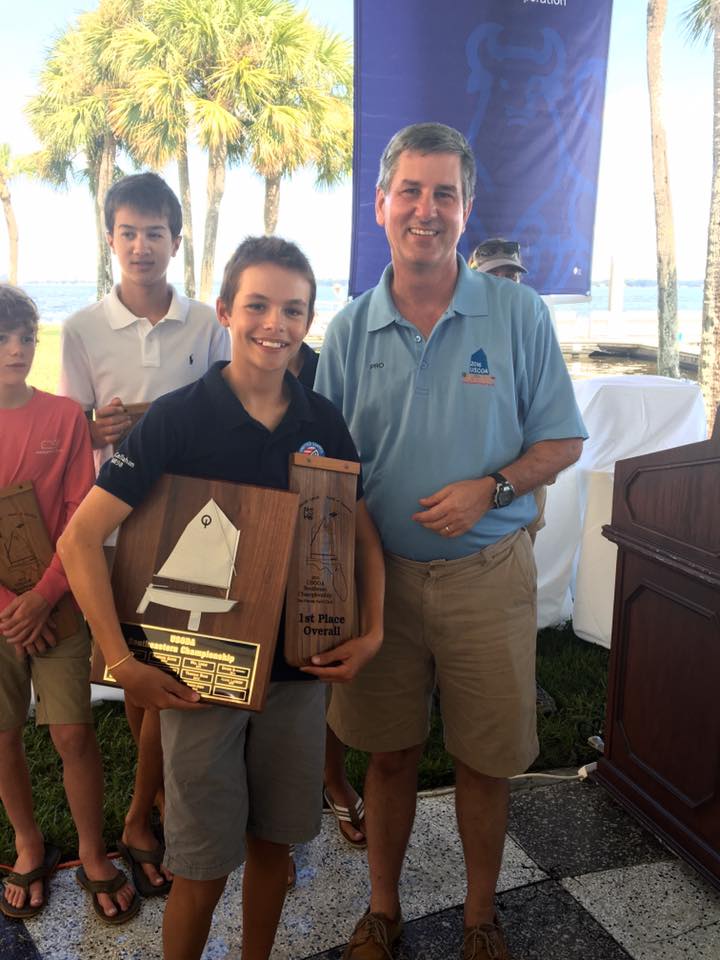
Thursday, November 17, 2016

Regatta Debrief - Naples Cup - Pilo and Arthur


A recent record 27 Optis from LYC competed in the Naples Cup! This was remarkable given that 4 of our top RWB sailors were competing in Bermuda Nationals (Congrats to Justin Callahan on winning that event, with Mitchell Callahan 3rd, Stephan Baker 5th and Bella Casaretto 13th). We want to thank our Naples Towers  - David Kronrad, Kelly Pullar, Joel Meshel and Sharon Johnson, and the 4 families who car-topped their Optis so all could attend - the Meaghers, Dixons, Burgesses and Bollands. It was a difficult logistical event and we are indebted to your help in making it successful!  
      LYC was led by Sara Schuman in 6th (3rd in Red Fleet) Connor Bolland 8th (5th in Red) Giulio Zunino 9th (4th in Blue) and Jonathan Siegel 11th (5th in Blue) Full results are here; the fleet of 105 boats was won by Noah Zittrer from Lakewood, TX. LYC's Green Fleet had a good showing with KJ Hill 4th and Will McDermot 11th out of 73!
    The regatta featured two types of conditions, Land breeze to start each day, followed by Seabreeze. Overall, the LYC sailors did much better on Sunday in both conditions. At the beginning it was hard for them to make a plan because of the shifty conditions, and they were not able to predict and adjust to the shift during the last four minutes before GO. Sailors needed to look further up the course than the short upwind mark, and keep re-checking their angle on starboard tack, and the angle of their wind pennant. All of these things should help the sailors find the end of the line that is favored - and they should keep a flexible game plan between 4 and 2 minutes.  Two races on sunday where this was the case: the second race on sunday there was a big left shift at about 3 minutes. There was a huge cluster at the boat, so sliding down to the pin was a big opportunity to outsmart the fleet. Sara, Giulio and Kaitlyn were the only ones who took advantage of this, but Giulio got an OCS! In the final race of the regatta, there was a big right hand shift at 2 minutes. In this case, the race committee helped tip what was coming next - just before the 5 minute gun, the windward mark boats got on a full plane with the marks moving them to the left. Because it was a sea-breeze with oscillations always back and forth, and the race committee had demonstrated all regatta that they were "reactive," not "proactive" to wind shifts, this indicated to me that the next shift coming was from the right.
     In the land breeze, it is important to prioritize what you see, where the next puff is, and once you are on the edge of it, get on the tack that takes you closest to the mark. While playing the percentages by sailing the long, lifted tack is important, the shifts will not be regular in timing or size. Pressure is king and you need to stay in the pressure!
     In the Seabreeze, the shifts are not as big, but you do need to notice what tack has a better angle, because the wind will go back and forth in a regular pattern. Starting well, having good boaspeed and doing all the little things well is whats important!

In choppy conditions - which we faced in all 4 seabreeze races,  minimizing tacks is key. Kaitlyn, Sara and Libby all and races where they couldn't stop tacking, with disastrous results! On the right side of the course, Sara kept thinking she was on or close to the layline, only to have another boat tack on her air, forcing her further right. For Kaitlyn it was more an issue of not holding a narrow lane - having a boat close to leeward and loosing just a little hight until they became an issue to her having clear air. In light/medium air and choppy conditions, you should try to pick lanes that are more "sustainable" - bow out on opponents when you can, and when you do tack on their hip, give yourself an extra couple boat lengths.
    Another move to minimize tacks is to get in the habbit of "laying up" to the mark - approaching from 5-10 boat lengths below the starboard layline so that you:
*Avoid the layline parade and all its bad air.
* Can benefit from a header or a lift.
Here's a picture:
When you do get to layline, put a little extra distance in the bank so you get around safely. Sara used Laying up to go from 5th to 2nd in the race she eventually won - the other 4 boats were all tacking on each other around the layline! On a side note, it was neat to see MY coach who taught me this -Robby Brown - out dropping his knowledge on the Sarasota opti team.
    Speaking of tacks, they can get better! The two widespread issues for this regatta were sailors not flattening into the boat in light air (its easier to land on the rail, but you over flatten/slap the boat on the water like a breaching whale) and not moving the mainsheet through the tack. Here's a Bella tack from Germany where she does all these things well - trimming into the tack, easing a lot on the flatten (when your apparent wind shifts back) and smoothly landing in the boat.


Downwind, our sailors did a pretty good job finding clear air - I was pretty happy with their tactics. Speed was not as good as it could have been due to sail trim. In light/medium air, you have to have the boom out exactly at 90degrees. Lets check in on how some of our sailors were doing Saturday:
Simone (left) and Lulu (right) have their sails trimmed in too much - stalling the airflow on the sail. Nice kiting and keeping the weight forward by Simone - the daggerboard should be as high as Lulu's.


Libby's sail too far out - spilling too much air!

 
Sara (left) and Kevin (right) with their booms about right - parallel to the mast thwart. Kevin can pick his board up more and scoot forwards. As a side note, we only allow the smallest sailors to hang off the daggerboard, larger sailors should kite with both hands free! 


We are going to keep enforcing that the kids follow a routine, on land and on the water. We detailed this in our last debrief (which is getting published in the next issue of Opti News) and encourage you to re-visit it! We will be making some adjustments to how sailors do the split tack course test, and sailors need to be more diligent/take more time and attention on their sail-ties and mast rake on the beach! The next regatta is the midwinters/spring team qualifier in New Orleans, so there is no time to lose!


Wednesday, October 26, 2016

LYC Takes Opti Team Race Invite


Call me biased (its been said), but I found "Team Race Week" to be one of the most fun times at LYC. The 4 coaches at the USNT practice, lisot head Pepe, lima head Pete Strong, world team race and college ace Adrienne Patterson Kamilar and yours truly led 26 sailors who competed with true corinthian thirst amongst each other in drills and races for 2 days. The umpires showed up Friday and gave the sailors the most lifelike practice possible - they were also kind enough to share some important insights before after the USNT Practice. For the regatta, 24 teams of 4-5 sailors each competed in the LYC Team Race Invitational, with sailors from the Virgin Islands to San Francisco to Newport and 21 sailors from LYC racing! New sails and some great competition (I estimated before the regatta that 9 teams probably expected to make the top 5 playoff) and some important people to thank: the teams who attended and the parents who made it possible, event coordinator Bobby Meagher, PRO Patrico Sly, Start/Finish Mike Redmond, David Gosling, the Cassarettos, Marks: Kevin Bolland, Francesco Zunino, Scoring: Jorge Agnesse, Boatswain Brett Moss and assistants Anna and Mackenzie, Dock jefe David Smith, Housing coordinators Wanda Cassaretto and Robin Meagher, Commodore Commette, Fleet Captain Morley, and GM Nadine Rockwell for giving us the run of the facility to provide great visibility, access and hospitality.  Apologies to the scores of contributors I have doubtlessly omitted!

Most of the team racers from LYC teams 1-4, Coaches Pilo and Arthur.
The kids! LYC 1 went undefeated and won the regatta. This was particularly gratifying given our finals loss from last year and makes us 2-0 going into the Opti Team Cup in Germany this coming weekend (I am making final edits to this post from my Hotel in Germany!). LYC 2 finished a respectable 6th - just out of our goal of the top 5 finals. LYC 3 also exceeded its pre-regatta coaches ranking, but felt like it left some wins on the water with some mistakes and missed opportunities - part of learning! Full results to come. The highlight of the regatta was provided by LYC 4, which beat the USODA 1 team, comprised of USVI aces and National team sailors. The LYC 4 team's strategy was simple, 3 sailors (Simone Moss, Kevin Gosslin, Yanni Brooks, Steven Tate on Sunday) go fast! Use your best instincts, focus, and fleet race skills to get around the Digital N course as fast as possible. The team captain, LYC newcomer Sara Shurman was responsible for all the team racing. On the last leg against USODA 1 she helped spring her teammates to sail beautifully to the 1,2,4th.
 
Simone Moss and team on the 1st beat against USODA 
The regatta Saturday was light and shifty from the Northwest. Sunday brought a slight persistent righty, but the breeze didn't really kick until the playoffs when the puffs on the last leg reached 15kts. In some ways the regatta provided a case against too much "team racing." I would estimate that 50% of the passback attempts made resulted in the slowing boat getting passed by the opponent. Slowing/hooking/covering someone requires matching their speed, and so many times a boat would attempt to make a "team race" move with insufficient speed and end up "swinging and missing" on a boat that had greater speed. I always coach the kids to Team Race as little as possible, and in lights air use "passive balancing" - use ones wind shadow to slow opponents from further ahead without risking an overlap and the windward-leward situation it entails.
 
LYC 1 claiming their 1st place trophies. From left: Regatta Chair Bob Meagher, Joey Meagher, Connor Bolland, Mitchell Callahan, Justin Callahan, Bella Cassaretto and Commodore Peter Commette. 

Beyond overcoming the psychological defeat of last year, there are some things that I think our LYC 1 team race team has improved at, things at that can be instructional to aspiring team racers:
    1. Play/Phase recognition. We have only 3 base play calls: 1, 2, 78 (not to be explained here, there is an opti news article upcoming, with play 78 called "Four"). We have 3 phases of a team race: Winning, Converting, Chasing. We recognize the phase quite quickly - it answers the fundamental team race question: should I be slowing down my opponent or going fast myself?? If we are "Winning" we have a play and are going fast; if not a play 1, using the "pushing" strategy from the lead teammates. If we are converting, its business time! Time to team race - take the opponent out you need to get your mates up, then "release" sail ahead of your pair to get to the next mark/finish. We converted successfully in both races of the finals. If we are chasing -  this happened only once when LYC 1 had all 4 boats over the start line -  go as fast as possible and unbalance to catch 2 pairs. Then 78 them! Our team was the quickest to realize there was a problem, call "78" and bring the fight to them as a team. It was how we won the ultimate race of the finals. Justin pinned his pair  to the left of the finish line, while Joey and Bella helped move Mitchell out of last. Justin then released; tacking away and breaking for the finish line just in time to beat 2 boats.
    2. Starting. Practice = perfect. We run a hybrid scheme: attack the teams you expect to match up with you anyway at 2minutes, then break for your designated zones and start on time. This regatta was our best team starts - in the finals we won both starts and it was only mistakes/umpire initiated penalties on the first leg that made it a contest. On a side note, I think starts are where we have benefited most from other coaches: Pilo/Happy/Lior's coaching on winning 1 v 1 matchups and Joakim for my favorite start drill. For my part, I just to trust the sailors to do what they say they will do and scout the other team a little bit!
     3.  How we interact with umpires. 2 concepts: Win without umpires, and help umpires see your 'last point of certainty.' If you can control your pair or win the race without a call you should keep clear/give the time and opportunity to avoid contact. We only want a protest when we are Chasing. if we are Controlling, putting a call in the hands of the umpires is lower percentage than our ability to convert/balance/win. We do our best to keep clear, be clear with umpires and avoid the needless shouting so many Opti sailors sadly succumb to! In the end clarity builds trust and you get a fairly umpired finals.
  4. Communication! As I said at the USNT practice, communication should be 1-3 words. We call "Ride" when  a teammate should tack and duck. We call "Switch" when a teammate should tack and take my pair. We call the play number and repeat it. We work to pump up the volume while keeping it concise: trust of teammates over micromanagement.
 5. Boathandeling. In addition to being advised to loose cover their paris using mainly wind shadows, LYC 1 was able to stay and get ahead with tacks up the course. The tacks were never illegal, the advantage came in two areas: carry up the course at ones pre-tack speed - these kids are great at riding the 'chine' with a long smooth roll ; and mainsheet play on the flatten that adjusts for the apparent wind changes caused by a good flatten .
  6. Understand and Execute. Critics of our team who think we just win because we have three of the best team racers in the country (and they are partially right) saw an evolution of LYC 1. The best compliment an opposing coach paid us what that we "looked like a good college team race team." Much of our terminology is the same as college and should serve our sailors well down the road, and we did shift instantly into he "Converting" phase whenever the combination was less than ideal. Germany will be a test for us in the starts against better comp, boat speed/handing on longer courses, and a radically different experience; I still trust that our sailors ability to run our american system will help in races that start without a clear winner. We know that we can be successful by bringing the fight to the other team and trusting each other.
   Thanks to all for a beautiful weekend.

US National/Development Team Practice at LYC
 

Wednesday, September 21, 2016

Regatta Debrief - SE Champs - Arthur Blodgett & Pilo Rocha

This past weekend 15 sailors from LYC traveled to Jacksonville, FL to compete in the Southeast Champs hosted by Florida Yacht Club. The event was a USODA Qualifier with over 160 boats competing. Mitchell Callahan won the regatta by 4 points over Justin Callahan in 2nd! Stephan Baker was 6th and first in Blue fleet, and was winning the race on Sunday by a 1/4 leg before the breeze shut off! Giulio Zunino was 11th overall and 3rd in Blue - his best showing in blue fleet to date. Congratulations as well to Jack Redmond who emphatically qualified for the 2017 Team Trials with a finish of 24th. The top 40 qualified - Ryan Konrad had already qualified at this summer's nationals but made the cut in his 2nd straight regatta finishing 29th (click here for full results) LYC now has 4 TTQ'd sailors in Silver Fleet and 14 overall- great improvement for the program!
    The conditions were among the trickiest we have seen at an major Opti regatta. The regatta was held on an oxbow of the St. John's river with a lot of current - over 2kts at times. On Saturday, the current was flowing from the Top Left to the Bottom Right of the course for the first 3 races, before switching for the last race. Overall, the fleet didn't do a great job adapting to the current: in 2nd race the entire `1st Fleet got swept to the left half of the course - not a single boat on the right half! In the 4th race on Saturday with the current switching, over 60 boats were penalized for being OCS with the "U"Flag in effect! Furthermore, a bunch of boats overstood the Port layline and had to reach down (against the current) to the windward mark! We practiced the past 2 Wednesdays and last weekend in current, and would have liked to see more sailors apply this in the regatta!
  When analyzing the current, sailors need to:
       - Know the exact angle at which it is flowing (you can luff next to a mark or committee boat, observe the wake, or do the bottle check).
      - Feel the speed relative to the wind.
      - Account for it on the start line: should I set up high or low? Is the boat or pin "up current."
     - Consider how it will effect every leg of the race - lay lines? -Long Tack to the mark? -pushing up or down on the reach? - effect on the run?

Wind: 
The wind conditions for Saturday were 10 to 12 knots out the E/NE. It was really shifty with big oscillations that were random - you couldn't time when a righty or lefty was going to come. The breeze went right about 20 degrees over the course of the day, but there were plenty of races where the left paid! There was land closer by on the right, so when it went right it got especially shifty! Some of the right puffs were only 3 Opti lengths in diameter and didn't last very long. The final race of the day saw some boats becalmed while others were almost planning on the reach leg!
    How could kids make sense of this? Well the most important thing was to start in phase with the last shift before the start - to start in the favored 1/3 of the line and then get across the fleet. Sailors needed to stay flexible and tuned in to the wind shifts while they were in sequence. For the 2nd start, Stephan was on my coach boat when we observed that they were moving the pin up, but we didn't think it was enough to be favored. Then at about 3:30 to the start, the wind shifted further left, he recognized it, and won the pin! He was able to cross most of the fleet, only for an even bigger left shift to drop him out of the top 5 - good process but tough result! In the first race Jonathan staked out the favored boat end, and led the race wire to wire. Unfortunately he was over by a foot and scored OCS, but the lesson remains - the boats that start well at the favored end will be able to cross the fleet, control the race, and sail the wind shifts to the best of their abilities.

Routine:
A big thing we stressed this regatta is the routine that sailors need to follow on land and on the water.

Before the Regatta:
-Make sure your boat is fixed.
-Research the venue - google maps with the Geo overlay, forecast, tide forecast, and talk to your friends who sail there regularly! Our online tide info proved to be wrong, but the locals (Snipe sailor Hal Gilreath) set us straight on the water.
-Read the Sailing Instructions online before you get to the venue.
- Be fit, hydrated and rested!

The morning of the regatta:
-Plan a good/healthy/early breakfast.
-Re-check the forecast.
-Give yourself ample time to rig and check over equipment. Always check your mast rake, as things can move while trailering. Before Saturday AM, Michaels rake was 109" while Bobby's was 114" both should be sailing at ~112." No trash/water in the boats!
-Check in with your coaches (we are happy to  check sails once you think it is perfect).
-Hydrate!
-Team Meeting
-Skippers meeting
-Check out (different policy at each regatta - your responsibility to have read SI's and know it!)
-Launch ASAP.
-Find coach for tow - our sailors did this Sunday and Gold/Silver were 1,2 getting to the racecourse - we were the most prepared team!

On the Water:
1. Get with a partner and start doing split tacks from the middle of the course. Check your sail settings (Sailties, sprit, vang, outhaul, luff tension - make sure your cunningham is on correctly especially with new sails!!!) as you go and start to develop feel for the conditions.
2. Make necessary adjustments and keep checking the course! Always make sure you are checking from the middle - between the start line and 1st mark.
Note: this is different that group rabbit starts we did last year - we think it is better for giving the kids more information and getting them to analyze for themselves. 
3. Sail fast downwind getting a feel for the waves and wind. Make sure your vang is good!
4. Start checking the start line - linesight, current, length, favored end. If you have time sail from either end with a partner to determine the favored end. You should also have a really good feel for your angle off the line, (repeatedly sheet in and go up wind for 10 seconds)  so you know when it changes and can recognize a late wind shift. When I plan to start at an end, I do at least 2 30second practice starts for myself.
5. Check in with your coaches - discuss your strategy and get feedback and give them any trash! See if your research on the line, wind and current coincides with theirs. Make a plan for each leg of the course!
6. Have a great race! After finishing self evaluate your Start, Strategy, Tactics, and Speed. If you were deficient in any of these areas you will need to fix it quickly and have the mentality that you will improve the next race.

Thank you to the parents who towed: the Morleys, Meaghers and Goslings, and to all who suppled food for the kids and coaches and supported the event! We look forward to seeing you at the upcoming practices as we get ready for our next regatta: Key Biscayne on October 1st and 2nd.


Friday, August 19, 2016

Opti Pre-Season Meeting

Next Wednesday, August 24th, from 5:30pm-7:00pm we will be having our Opti Fall Orientation and Cookout that is mandatory for all Opti sailors and their families. Come meet our coaching staff and learn the ins and outs of our Opti Program. We look forward to seeing returning sailors as well as some new ones!

Monday, August 8, 2016

LYC Wins Team Race Nationals - Regatta Debrief


A year of team development, team-race immersion, and tough close calls finally came to a resounding conclusion and we are National Team Race Champions! It was a weird regatta, with storms interrupting the middle day of racing, and the 2nd round unable to be completed - not to mention all 5 of our sailors, having raced internationally this summer fighting through varying levels of burnout /intercontinental jet lag. The expectations were sky high - anything short of winning the nationals would have been viewed as a huge disappointment to all the sailors and myself, and the stakes were real: a trip to Germany to compete in the Optimist Team Cup for the winner only.
     The competition was good - the number 2 seed CRYC spectra boasted 2 eventual top 5 finishers in the Fleet Race nationals, including winner Stephan Baker, had team raced together at the preceding North Americans, and were overall probably the fastest overall team. LISOT Black was the 2 year defending champion, and had Justin and Bella's World's teammate Thomas Hall.
   Still, we managed to stay in control of the regatta throughout every stage. We went 11-0 in the qualifying round for a share of the lead, began Day 3 by beating Coral Reef  in the race that would have decided the regatta had the nearby storms moved in (as had been predicted), and ended the races that ultimately counted with a 14-2 record and the win for the team of Mitchell and Justin Callahan, Bella Cassaretto, Joey Meagher, and Connor Boland. The Trophy returns to LYC for the first time since 2011.

     The Coral Reef Race was by far our best "Team Race" of the regatta. After getting boat speeded by the pairs going up the left of the course, we came into Mark 1 desperate to slow down the race. Justin followed Stephan into the mark, and tried to draw a Rule 13 (While Tacking) foul on Stephan as he crossed head to wind to round the mark. But the Call went against Justin! I believe the umpire interpreted the situation to be the following, as described in "The Call Book for Team Racing:"

Justin had studied the call and felt that he was not altering course immediately before the contact occurred (this would put him in the right), but one still had to appreciate the call book knowledge displayed by the Umpires! The saving grace in the midst of all this was that Joey was able to get over the top of Stephan, roll him on the reach leg, and perform the "Move of Death" - cranking in ones sail on a reach leg for maximum blanketing effect - while Bella and Mitchell sailed by. The teammates then gave help "Playing back" until Justin was out of 8th, and we approached mark 3 with a Solid 3,4,5,6. When the CRYC sailors leading the race had to come back and give us the 1, we converted to first a 2,3,4,6, then a 1,2,3,7, with Justin keeping and Gaping the ace to take the drama out of the race even as Stephan threatened to pass Joey on the last leg and Bella had to re-do the passback. Incredible team racing, a refusal to loose, and commitment to one of our team race mantras: "If we are solid with our Plays they will give us a better one!"
     More races were sailed that did not count in the final standings - Team Race Appendix P states that races in incomplete rounds shall not be scored - here Iv added all the races sailed to the final results.

1. LYC 1                 18-2
2.CRYC Spectra     16-3
3. LISOT Black      15-4
    LOOT Blue         15-4
5. LIMA Red           14-5
6. CERT Blue          10-9
7. LYC 2                  9-9
8. CERT/SCYC       9-10
9. LISOT Cayanne  9-11
10. BCRP                8-10

It was really gratifying to see the LYC 2 team of Jonathan Siegel, Giulio Zunino, Lucy Meagher, Bobby Rielly, and Ryan Satterburg compete soo well - they beat Coral Reef in on of the last races of the regatta, and took LYC 1 down to the wire in both our races with them! Its a testament to the work we have all been doing with team racing this past year that they could execute the team race moves (passbacks and Mark-Traps) with the best, and a credit to their coach Chris Williford that they were able to jell and improve throughout the regatta - they had never sailed together as a team before the practice day! Having 2 LYC teams do so well portends great practices to come!

Full results, tables, team members etc can be seen here. 


Team History 
This approximate iteration of LYC 1 began team racing together last fall at the LYC Team Race, and two specific individuals deserve recognition. Garret Dixon, who as one of the original team members was instrumental in developing the team cohesion, and the teams initial success on the water. Having been coached by me longer than most of the sailors he knew my playbook the best, and helped us develop a system where everyone understood what the other was going to do based on the situation, and trusted them to do it. He was our self appointed "Chief Synergizer" or "Synergizer in Chief" and deserves credit for the championship. Pili Callabresse introduced the concept of "Team Synergy" to the group, counseled us (all of us) through that first finals loss at the LYC Team Race, and was the kids primary fleet race coach through the fall. Id also like to thank the sailor's parents and other coaches: Lior, Lucas, Joakim and others for their help and support!
    Given the kids busy fleet race and regatta schedules, we probably practiced on the water a total of 6 days over the year and sailed 2 regattas before the Nationals. To make up for this deficit, we scheduled extra classroom time, which often took the form of "Distance Learning" conference calls with shared materials in front of all of us - wether it was our playbook or pages from the Call Book. We improvised - when we had people in only 2 locations we could Skype, but when it was 3 or more Alissa Callahan would set up an interface that allowed 1 group to be viewed by everyone else - it allowed me to draw pictures and hold them up to the screen on our last call from Newport.
    The meetings unfolded in 2 ways: I would ask questions of the sailors on what concept to apply to a given situation and what they should do, and the sailors would have input on parts of the system, as well as goals and what they wanted to work on. The former was not so much about answering questions correctly for me - it was about demonstrating to ones teammates that one was deserving of trust and the kids for the most part (minus Joeys unannounced 10min bathroom breaks) took it seriously. The area the kids had the most formative input was on the start strategy they wanted to implement.
   Just before the Nationals, I had all 5 team members take a written Playbook Knowledge Test. They crushed it - all scores above those of our 3rd skipper at High School Nationals the past 2 years and Bella aced it! Chris Williford, a past Opti Team Race Champion was really impressed by the kids knowledge - the game of 4v4 team racing seems to be evolving!
   
Team System
Our system of team raced system is a concept based approach that I adopted from College team racing for Optis. While to some "Play" is a verb, to us, "A Play" is a noun denoting an achievable, stable finishing combination. 1st, 2nd, 3rd, anything (team wins regardless of 4th boat's finish) is the most stable combination, and we call it "Play 1." When we have achieved the play one, our accompanying concepts are "SZCB" - Speed, Zone, Cover, Balance. If the Play 1 is not achievable because the other team is winning the race and winning more pairs, we always have the fallback of "Play 4" - 3,4,5,6 where the other team is held in 7th and 8th and thus looses the tiebreaker. Other teams call this play "Suicide" or "Forcing the Tie" and we actually don't call it Play 4 but I can't tell you everything! The concepts for Play 4 are different - not everyone sails fast! Instead, we run a Gap/Push concept, where the pushing boats know to go Play 1 as soon as they can. We have a couple weaker plays that we can utilize on our way to Play 1, but the basics of 4v4 team racing is the Play 1 or the Play 4. In numerous races, our kids did a great job of figuring out quickly if they had a Play 1 opportunity, and Balancing it. When we lost the start and didn't have it, we would start aggressively slowing whatever 2 pairs we could get, sometimes even on the first leg!
    There are 2 basic start systems for team race starting: matchup and zone. In a matchup start, each team member starts trailing a specific opponent at 2 minutes, with the goal of pinning them away from the start (like a match race). The goal of beating your pair supersedes the goal of starting on time. The zone start by contrast calls for limited engagement, and assignes each team member an area of the line to start on. We ran a unique hybrid of the two systems, the specifics of which the kids designed so I won't reveal!
     At this regatta, we encountered some very unconventional opposing starting strategies - from CRYC -  "Build A Wall" approach, to BCRP - "always lead back," to LOOT's always help out a teammate even at your own expense move. Before each race there would be a dialogue with and amongst the LYC 1 sailors on both the strategy and personnel we were expecting from the other team on the start and how we should attack/defend it. For example, we went into the CRYC with a strategy for beating their Wall (which might have worked better) but a game plan of making them match up with us on our terms. They never built the wall, but still started pretty well playing our game!
   One idea I try to reinforce with the starts is the idea of spacing. We never want one of their boats to luff up 2 of ours! While we didn't win as many starts as we probably should have during this regatta, I think spacing allowed us to avoid catastrophy so we could always team race back. Connor figured out how to help this on his own the first day and it really got our team's starts going. Even though he was supposed to start somewhere on the line, he would hold his pair above and to the right of the committee boat, giving all his teammates more room to operate and control their pairs. Then at about 35 seconds, he would leave his man, speed reach under the committee boat, and start on time. Connor sailed exceptionally on Day 1, being part of a 1,2,3 in almost every single race, including the win vs LISOT Black.
     It was by no means a perfect regatta - many of the mistakes CRYC made against us we allowed ourselves to do in our loss to LOOT on Day 3 (we had already beat them on Day 1) - namely, not solidifying the Play 1 (1,2,3,X). The boathandleing, starts, and general repetition are all areas we need to improve on if we hope to Place in Germany. But for now, we are happy to have reached a goal long awaited and fully strived for.

Arthur Blodgett

Sunday, July 3, 2016

LYC Dominates Opti Team Race WORLD CHAMPIONSHIP!


It is with great pride in our sailors, coaches and our program that we can announce that two LYC Opti Sailors, Bella Casaretto and Justin Callahan, just won the International Optimist Dinghy Team Race World Championship with their teammates in Portugal.  On this Independence Day Weekend, the U.S. Team was undefeated against teams representing the powerhouses of Opti sailing around the world.  The team also won the Nations Cup, awarded to the group with the lowest combined score from all nations.  GO USA!!  GO LYC!!